
Management

Resource Development

Resource Development

There are 2 parts to this assignment

Each Part must be at least one page.

Part 1- Funding Sources

The most successful fundraisers are good prospect researchers. This means they use existing online and print resources to identify which funding sources (specific individuals, foundations, government sources, etc.) are most likely to fund the organization/project based on past giving, mission, priorities, and geographic giving area.

To prepare:

  • Consider a nonprofit organization for which you work or with which you are familiar.
  • Analyze 2–3 potential funding sources for this organization.

The organization for this assignment is NAMI (National Alliance on Mental Health)

https://www.nami.org/Home

Part 1- Must at least be 1 page and include:

  • A description of 2–3 potential missed funding opportunities. Explain why they are or might be missed.
  • Describe potential funding sources and explain why they are appropriate for your organization.
  • Analyze the strengths and limitations of each funding source.
  • Finally, describe any potential missed funding opportunities. Explain why they are or might be missed.

Be sure to support your postings and responses with specific references to the Learning Resources and outside scholarly resources.

Part 2- Foundation Prospect Research Challenges

When researching foundations (corporate, community, private, or family), it is important to learn as much as you can about each potential source. You can then evaluate whether the type of foundation is a good match for the organization’s funding need.

To prepare:

  • Consider a nonprofit organization for which you work or with which you are familiar.
  • Analyze potential prospective foundations that might support this organization.

The organization for this assignment is NAMI (National Alliance on Mental Health)

https://www.nami.org/Home

Part 2 must be at least 1 page and Include:

  • A description of two foundations you have identified as higher prospective donors.
  • Describe two foundations you have identified as lower prospective donors for your organization.
  • Evaluate how each would or would not be a good prospective donor.
  • Be sure to explain how you arrived at your decisions.

Resources

Martin, V. (2010). Prospect research. In E. R. Tempel, T. L. Seiler, & E. E. Aldrich (Eds.), Achieving excellence in fundraising (3rd ed., pp. 125-137). San Francisco, CA: Jossey-Bass.

Williams, K. A. (2013). Leading the fundraising charge: The role of the nonprofit executive [ebrary version]. AFP/Wiley fund development series. Somerset, NJ: Wiley.

Filla, J. J., & Brown, H. E. (2013). AFP/Wiley Fund Development Series: Prospect Research for Fundraisers: The Essential Handbook. Somerset, NJ, USA: John Wiley & Sons

Tsiotsou, r. (2007). An empirically based typology of intercollegiate athletic donors: High and low motivation scenarios. Journal of Targeting, Measurement and Analysis for Marketing, 15(2), 79-92

Walden University, LLC. (Producer). (2009c). Resource development: Funding sources [Video file]. Baltimore, MD: Author.

Requirements: at least 2 pages

Resource Development Read More »

Instructional strategies Discussion 5: Instructional Strategies

Instructional strategies

Discussion 5: Instructional Strategies

Organizing instructional plans that generate student/learner interest and foster their participation is an important concern in the teaching and learning processes.

Attention to students’ developmental and learning preferences can help to ensure that students/learners become more involved in the lessons and activities that are designed for them.

Discussion

  1. Read the articles :
    1. Strategies at a distance (Links to an external site.)
    2. Effective strategies for teaching at a distance (Links to an external site.)
  2. Now discuss the key aspects that are important to consider when planning lesson/course delivery at a distance? Note: consider both fully Online as well as a Hybrid situation
    1. Include how Bloom’s Digital Taxonomy (Links to an external site.) can be useful in lesson planning?

Requirements: 3 paragraph

Readings-5 Instructional Strategies

Readings:

Textbook:

Wood,

  • Chapter 5
  • Appendix
    • Sample Interdisciplinary Unit Plan Web Designs

Gordon, et al

  • Chapter 9
  • Chapter10
    • Evidenced-Based Instruction

Supplementary Reading

Download The 4 Cs map of Instructional Design.docx
Teaching at a Distance: (Links to an external site.)

Teaching strategies for the Remote Classroom (Links to an external site.)

The Covid 19 Toolkit for Teachers and Parents (Links to an external site.)

Teaching styles and curriculum delivery:

How teaching is Changing: 15 Challenges for the 21st Century Teacher (Links to an external site.)

What is your teaching style? (Links to an external site.)

Teaching Methods and Theories

https://bookshelf.textbooks.com/reader/books/97801…

chapter 9 and 10


chegg.com

username: chaund@gmail.com

password: Mzpooh08!

Please let me know if you have access to both books.

Instructional strategies Discussion 5: Instructional Strategies Read More »

Discussion 6: Assessment and the Curriculum

Discussion 6: Assessment and the Curriculum

22 unread replies.22 replies.

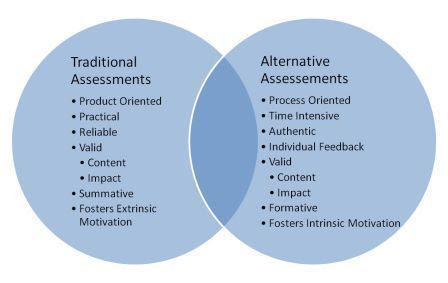
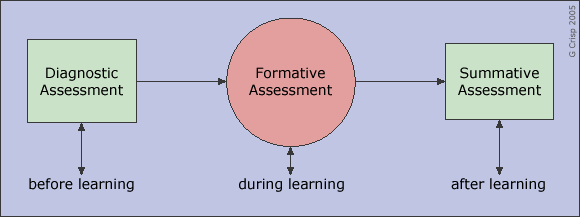
In the past, evaluating instruction was generally perceived to take place at the end of the instructional process. However, evaluation that takes place during the process of instruction, referred to as formative assessment (Links to an external site.), provides important evidence and data for reteaching, accelerating, and/or providing additional learning experiences through various modes. Summative evaluation (Links to an external site.) comes at the end of instruction in the form of final exams, unit exams, or end of course exams.

Instructors should remember that there are numerous other techniques other than testing for evaluating student performance.

Discussion:

As an instructional leader, how will you influence the appropriate development and implementation of assessments followed by the use of assessment data to inform instructional practices?

  1. Be sure you cite your text book or at least 2 other sources and add resources at end.
  2. Be sure to respond to at least 2 classmates posts.

Requirements: 5 paragraphs

Discussion 6: Assessment and the Curriculum Read More »

1. Writing a reflection paper about the presentation (Kian Boloori). The format should be as follows:

1. Writing a reflection paper about the presentation (Kian Boloori). The format should be as follows:

Management Question

1. Writing a reflection paper about the presentation (Kian Boloori). The format should be as follows:

  • Paragraph 1: This is a summary paragraph where you describe the presenter and write a short summary of the main areas of their presentation.
  • Paragraph 2: Write about three takeaways from this presentation. What was interesting or memorable in the presentation? What advice will you take with you and apply? Provide sufficient detail about what they said and how you plan to apply the information or why you thought it was interesting.
  • Paragraph 3: Write a thank you note for our presenter’s time. If you have any suggestions on how they could improve their presentation, write it here in a respectful way. Be aware that I will be sharing some of your papers with the presenter, so if you plan to connect with them on LinkedIn, do an especially good job.
  • Expected length is 2/3rd a page, single-spaced.

Speaker profile:

Kian Boloori is the Director of Compensation at Assembly, a leading software solution company that helps merchants navigate their eCommerce journeys. He’s been a Compensation professional for over 9 years and has designed base pay programs, job infrastructures, and stock equity plans from scratch for several companies. Kian is also the President of the Orange County Compensation and Benefits Association and is the co-instructor of one of the organization’s signature programs—”Compensation 101 for the HR Professional.”

Kian has his BA in History from UCLA and his MBA from UC Irvine.


2. Career Plan Activity (Base on Career Plan)

Map out your intended career plan through retirement. List your life priority (career, family, balance), target job + salary estimate, timetable to achieve, and preparation/ development needed. The focus is on what skills/experience you need to get to prepare yourself for the next job.

For example: Priority: career advancement

HR analyst ($45-60K)

1-3 years from now

Finish MBA, obtain at least 1 HR-related internship, join the MBA student association or a professional organization related to your career.

  • There are examples on BeachBoard to follow
  • You can use bullet points and bold sections to make the information easy to locate
  • Use feedback from your previous performance appraisals

3. Discussion post: Topics: Training, Performance Management (Chapter 11: Compensation – Powerpoint file)

Discussion should be an analysis of either a topic discussed in the lecture for that week and/or of one of the readings from that week. Discussion should be thoughtful and 1- 2 paragraphs long, only 120 – 200 words. You are encouraged to apply the material to an HR-related problem you’ve experienced or managed at work.

Thank you.

1. Writing a reflection paper about the presentation (Kian Boloori). The format should be as follows: Read More »

Resource Development Final Project

Resource Development Final Project

For the Final Project, you will create a Resource Development Plan for a specific nonprofit organization. The nonprofit organization you select could be the one you developed for Introduction to the Nonprofit Sector. The organization for this is NAMI.

https://www.nami.org/Home

The assignment must be presented as a 15- to 18-page paper (not including references, title page, or abstract), double-spaced, following APA format guidelines. Your weekly assignments will assist you in developing the areas below.

At a minimum, the paper should include:

  1. Organizational mission
  2. Description of programs and services provided by the organization
  3. Brief history of the organization
  4. Current sources of funding
  5. Potential new sources of funding
  6. Cultivation strategies (for each source)
  7. Education strategies (for each source)
  8. Solicitation strategies (for each source)
  9. Appreciation strategies (for each source)
  10. Role of board and staff in identification, cultivation, education, solicitation and appreciation (#5–9 above) of funding sources

Use proper APA formatting and include the following in your paper:

  • A title page and running head
  • An introduction that states the purpose of the paper
  • Level 1 headings to define each part of the paper
  • A conclusion to synthesize the entire paper
  • A minimum of 10 sources to support your paper
  • In-text citations as appropriate
  • A reference list

Your Final Project must demonstrate both breadth and depth of knowledge and critical thinking appropriate to graduate-level scholarship. It must follow APA Publication Manual 6th edition guidelines and be free of typographical, spelling, and grammatical errors. The project should be 15–18 pages (double-spaced), not including the title page, the abstract, and references.

References

Anna S. Artamonova. (2022). Financial resources management and assessment of the non-profit sector’s social efficiency. Journal of New Economy, 22(4), 97–115. https://doi.org/10.29141/2658-5081-2021-22-4-6

Drollinger, T. (2018). Using Active Empathetic Listening to Build Relationships With Major-Gift Donors. Journal of Nonprofit & Public Sector Marketing, 30(1), 37–51. https://doi.org/10.1080/10495142.2017.1326336

Ecer, S., Magro, M., & Sarpça, S. (2017). The Relationship Between Nonprofits’ Revenue Composition and Their Economic-Financial Efficiency. Nonprofit & Voluntary Sector Quarterly, 46(1), 141–155. https://doi.org/10.1177/0899764016649693

Finley, A. R., Hall, C., Harris, E., & Lusch, S. J. (2021). The Effect of Large Corporate Donors on Non-profit Performance. Journal of Business Ethics, 172(3), 463–485. https://doi.org/10.1007/s10551-020-04516-2

Gilroy Hughdonald Middleton, & Hyoung Tark Lee. (2020). Non-profit organization’s innovative donor management-the identification of salient factors that drive donor loyalty. Asia Pacific Journal of Innovation and Entrepreneurship, 14(1), 93–106. https://doi.org/10.1108/APJIE-01-2020-0010

Greenfield, J. M. (2010). Budgeting for fundraising and evaluating performance. In E. R. Tempel, T.L. Seiler, E. E. Aldrich, (Eds.). Achieving excellence in fundraising (ebrary version, 3rd ed., pp. 349-360). San Francisco, CA: Jossey-Bass.

Grossnickle, T. R. (2010). The trustee’s role in fundraising. In E. R. Tempel, T.L. Seiler, E. E. Aldrich, (Eds.). Achieving excellence in fundraising (ebrary version, 3rd ed., pp. 275-284). San Francisco, CA: Jossey-Bass.

Joyaux, S. P. (2009). Involving your board members in fund development. Retrieved from https://www.simonejoyaux.com/downloads/involvingboardfund_development.pdf

Kim, S., Gupta, S., & Lee, C. (2021). Managing Members, Donors, and Member-Donors for Effective Nonprofit Fundraising. Journal of Marketing, 85(3), 220–239. https://doi.org/10.1177/0022242921994587

McLoughlin, J. (2017). Advantage, meaning, and pleasure: Reframing the interaction between major‐gift fundraisers and philanthropists. International Journal of Nonprofit and Voluntary Sector Marketing, 22(4), 1–6. https://doi.org/10.1002/nvsm.1600

NAMI. (n.d.). Home: Nami: National Alliance on Mental Illness. NAMI. Retrieved June 20, 2022, from https://www.nami.org/Home

ROSHAYANI, A., MOHD HISHAM, M., NUR EZAN, R., RUHAINI, M., & RAMESH, N. (2018). Desired board capabilities for good governance in non-profit organizations. Administration & Public Management Review, 30, 127–140. https://doi.org/10.24818/amp/2018.30-09

Sargeant, A., & Jay, E. (2014). Fundraising management: Analysis, planning and practice (3rd ed.). New York, NY: Routledge.

Williams, K. A. (2013). Leading the fundraising charge: The role of the nonprofit executive [ebrary version]. AFP/Wiley fund development series. Somerset, NJ: Wiley. Retrieved from the Walden University Library databases.

Xiao, S., & Yue, Q. (2021). The role you play, the life you have: Donor retention in online charitable crowdfunding platform. Decision Support Systems, 140, N.PAG. https://doi.org/10.1016/j.dss.2020.113427

Yeomans, M., & Al-Ubaydli, O. (2018). How does fundraising affect volunteering? Evidence from a natural field experiment. Journal of Economic Psychology, 64, 57–72. https://doi.org/10.1016/j.joep.2017.11.004

Resource Development Final Project Read More »

Scroll to Top